India’s Timeless Jewelry Heritage: From the Golden Bird to Global Elegance

India, revered in ancient texts as the “Golden Bird” (Sone Ki Chidiya), has long been synonymous with prosperity, artistic excellence, and refined craftsmanship. Among its many cultural treasures, jewelry occupies a uniquely powerful position—not merely as adornment, but as a reflection of wealth, spirituality, social identity, and artistic mastery.

From Vedic times through the Mauryan, Gupta, Mughal, and regional dynasties, jewelry evolved alongside India’s civilizational journey. Gold, believed to carry divine energy, silver symbolizing purity, and gemstones associated with planetary influences were intricately woven into daily life. Kings, queens, warriors, traders, and common households alike embraced jewelry as both ornament and asset, making India one of the most coveted destinations for traders from Persia, Arabia, Central Asia, and Europe.

Over centuries, this interaction of indigenous traditions and global influences gave rise to distinct regional jewelry styles, many of which continue to flourish today. Among them, Kundan, Meenakari, and Temple jewelry stand as enduring symbols of India’s unparalleled artistic heritage—timeless yet adaptable to contemporary fashion.


Kundan Jewelry: The Royal Legacy of Uncut Grandeur

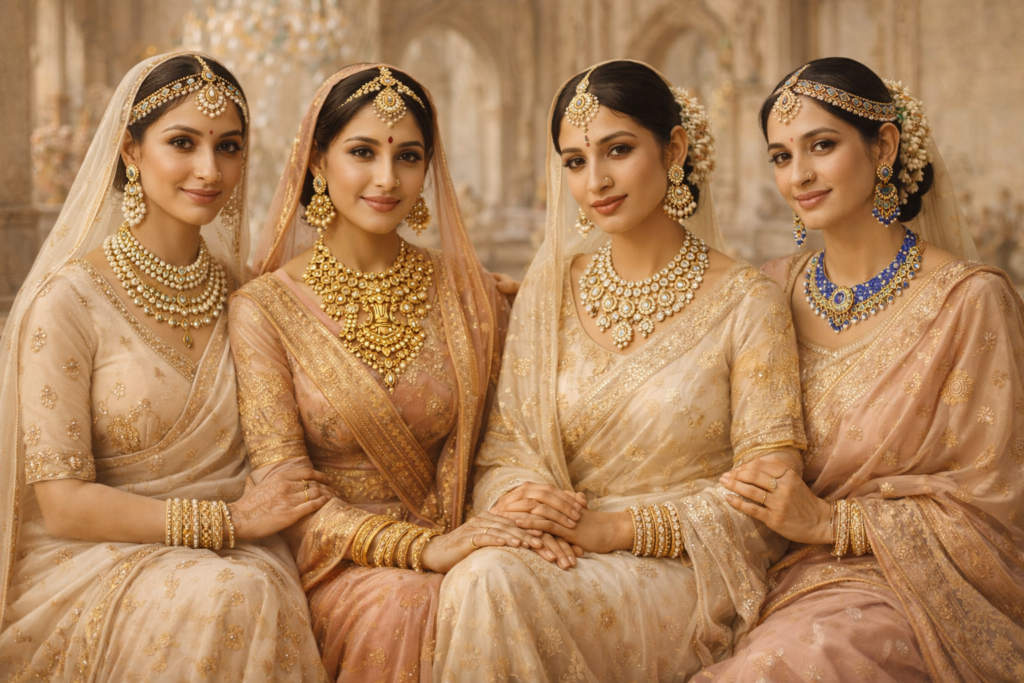
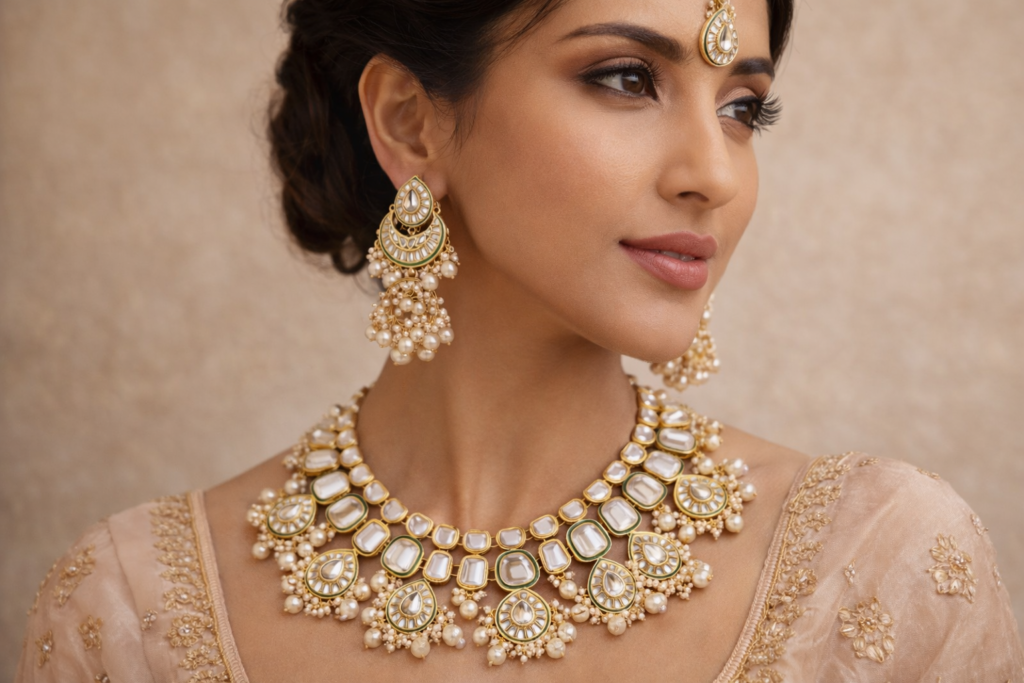
Kundan jewelry is among the oldest and most sophisticated forms of Indian ornamentation, reaching its artistic zenith during the Mughal era. The word Kundan refers to highly refined pure gold, used to mount uncut gemstones with extraordinary precision.

Unlike modern stone-setting techniques, Kundan involves embedding gemstones such as diamonds, emeralds, rubies, and sapphires into soft gold foil without adhesives—an intricate process that demands exceptional skill and years of training.


Kundan Jewelry: The Royal Legacy of Uncut Grandeur

Kundan jewelry is among the oldest and most sophisticated forms of Indian ornamentation, reaching its artistic zenith during the Mughal era. The word Kundan refers to highly refined pure gold, used to mount uncut gemstones with extraordinary precision.

Unlike modern stone-setting techniques, Kundan involves embedding gemstones such as diamonds, emeralds, rubies, and sapphires into soft gold foil without adhesives—an intricate process that demands exceptional skill and years of training.

Kundan Jewelry: The Royal Legacy of Uncut Grandeur


Kundan jewelry is among the oldest and most sophisticated forms of Indian ornamentation, reaching its artistic zenith during the Mughal era. The word Kundan refers to highly refined pure gold, used to mount uncut gemstones with extraordinary precision.

Unlike modern stone-setting techniques, Kundan involves embedding gemstones such as diamonds, emeralds, rubies, and sapphires into soft gold foil without adhesives—an intricate process that demands exceptional skill and years of training.
What Makes Kundan Jewellery Exceptional

Artisanal Mastery: Each piece is meticulously handcrafted using traditional techniques refined and preserved across generations of skilled artisans.

Royal Patronage: Once favoured by Mughal emperors and Rajput royalty, Kundan jewellery emerged as a powerful symbol of imperial elegance, opulence, and refined taste.

Bridal Significance: Today, Kundan continues to hold a central place in Indian bridal jewellery, cherished for its regal presence, intricate craftsmanship, and timeless appeal.

The city of Jaipur continues to be the heart of authentic Kundan craftsmanship, where artisan families preserve this legacy with devotion and pride.


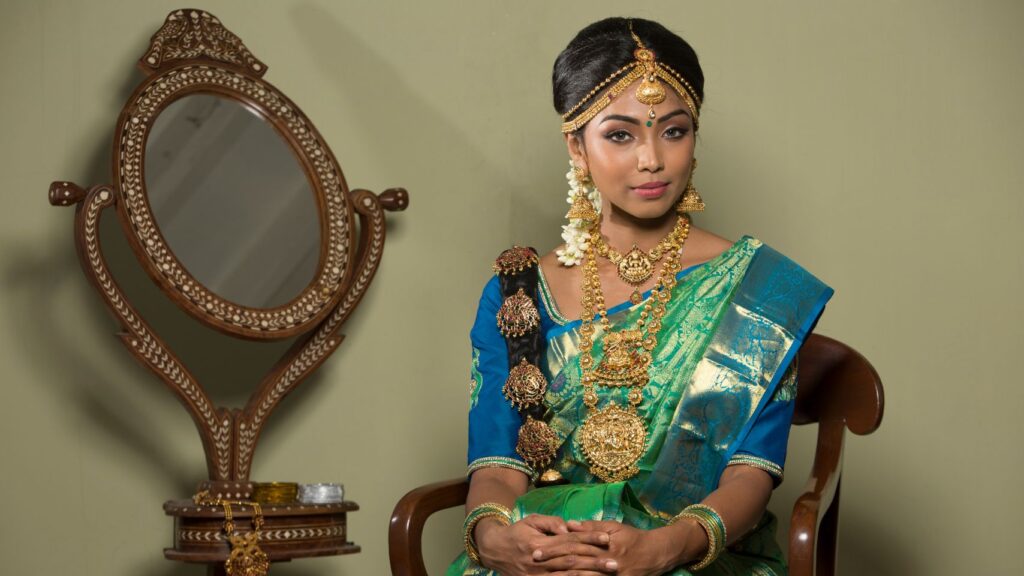
Temple Jewelry: Sacred Art in Gold

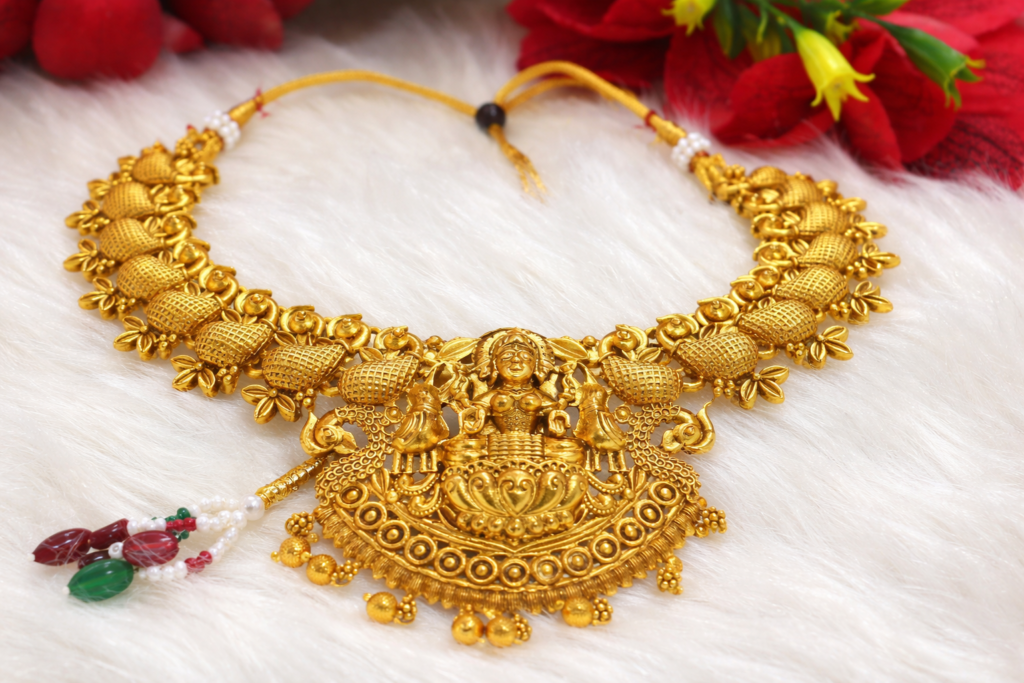
Temple jewelry originates from South India, where it was initially crafted to adorn temple deities. Over time, it became closely associated with classical dance forms such as Bharatanatyam and with ceremonial wear among aristocratic families.

These ornaments are typically made from high-karat gold and feature detailed depictions of Hindu deities, sacred symbols, and architectural elements inspired by temple carvings.

  • Why Temple Jewelry Is Spiritually Significant

    • Divine Imagery: Motifs include Goddess Lakshmi, Lord Ganesha, peacocks, lotuses, and temple pillars.

    • Ritual Importance: Worn during weddings, festivals, and religious ceremonies, it symbolizes blessings and prosperity.

    • Cultural Continuity: Temple jewelry bridges devotion, dance, and heritage in a single art form.

    The regions around Chennai, Madurai, and Kumbakonam are renowned for producing authentic temple jewelry that balances tradition with evolving design sensibilities.

    Chennai, Madurai, and Kumbakonam in Tamil Nadu are renowned hubs for authentic temple jewelry, continuing to produce masterpieces that blend history with modern elegance.


Meenakari Jewelry: Where Color Meets Craft

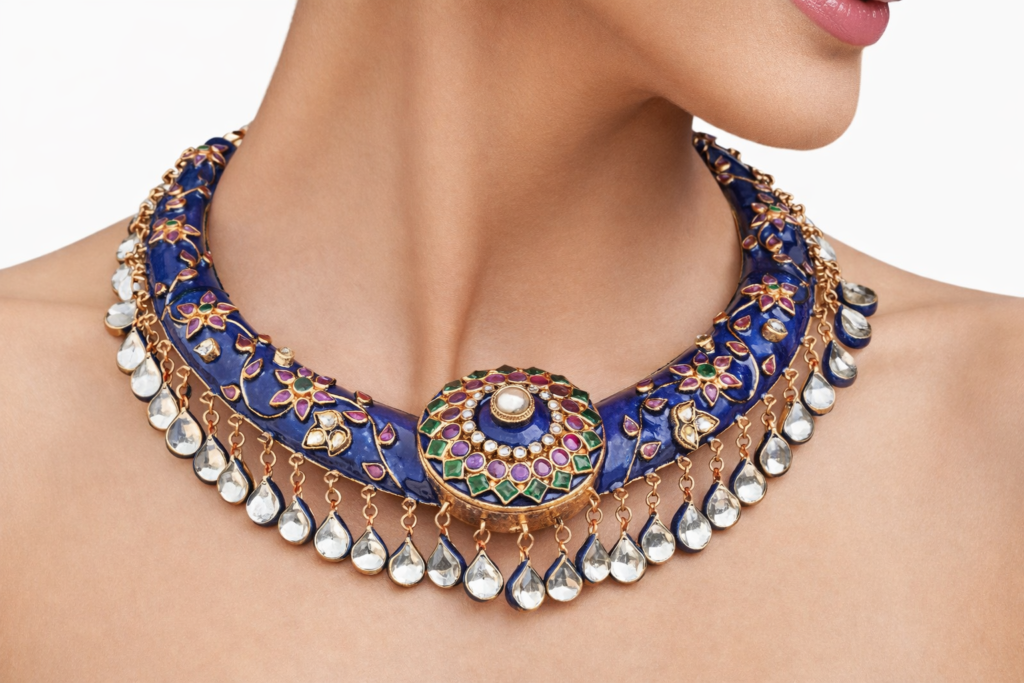
Meenakari is the art of enameling metal surfaces with vibrant mineral colors, creating jewelry that is as expressive as it is intricate. Introduced from Persia and perfected in India under Mughal patronage, Meenakari flourished especially in Rajasthan.

The process involves engraving designs onto metal and filling them with enamel powders, which are then fired in a kiln to achieve their signature brilliance. Traditional motifs include florals, peacocks, paisleys, and mythological scenes.

Distinctive Features of Meenakari Jewelry

  • Vivid Aesthetic: Bold hues such as red, green, blue, and yellow give Meenakari its unmistakable vibrancy.

  • Reversible Designs: Many pieces feature enamel work on one side and Kundan or gemstone settings on the other.

  • Global Appeal: Meenakari effortlessly blends traditional artistry with modern fusion styles.

Cities such as Varanasi, Udaipur, and Jaipur remain celebrated centers for this meticulous craft.


Preserving India’s Jewelry Heritage: Museums and Collections

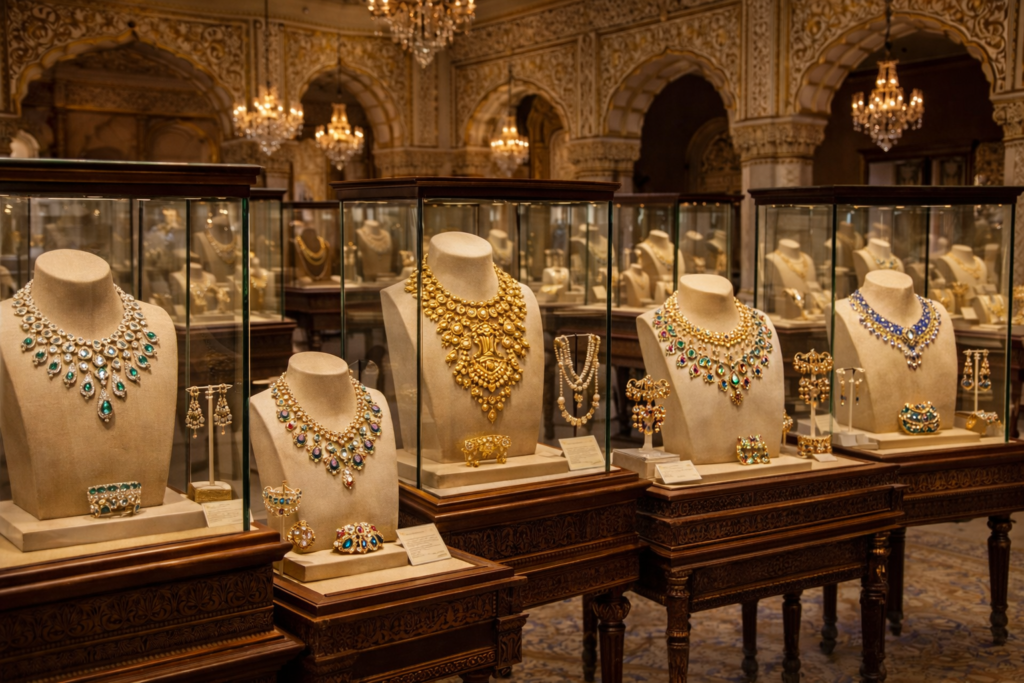
Despite historical challenges, such as invasions and colonialism, which led to the loss of many original pieces, India has managed to preserve a significant portion of its jewelry heritage. Today, several museums across the country showcase these timeless treasures, allowing the public to appreciate the intricate craftsmanship and historical significance of traditional Indian jewelry.

Museums Showcasing Traditional Indian Jewelry
  1. National Museum, New Delhi: This museum houses a comprehensive collection of traditional Indian jewelry, celebrating the diverse forms and genius of Indian craftsmanship. The Decorative Arts Gallery features artifacts from the 16th to the 20th century, including metalware and jewelry, reflecting the lifestyles and cultural heritage of Indian society. (National Museum India)

  2. Amrapali Museum, Jaipur: Dedicated to Indian jewelry and decorative objects, the Amrapali Museum showcases over 800 objects, including fine jewelry, handcrafted antiques, and exquisite curios. The collection ranges from tribal jewelry in wood and metal to silver and gold pieces, illustrating the rich tradition and craftsmanship of Indian jewelry. (Amrapali Museum)

  3. Alamkara – The Beauty of Ornament: An exhibition that explores the tradition of adornment in India, highlighting how gods were richly bejeweled, men proudly wore jewels, and women adorned themselves with intricate ornaments. This exhibition provides insight into the cultural significance and aesthetic beauty of Indian jewelry traditions. (Google Arts & Culture)


The Enduring Relevance of Traditional Indian Jewelry


Whether it is the imperial elegance of Kundan, the artistic vibrancy of Meenakari, or the spiritual depth of Temple jewelry, these traditions continue to resonate in the modern world. Today, they are not only cherished heirlooms but also inspire global fashion designers, contemporary jewelers, and collectors.

Traditional Indian jewelry has successfully transcended time—adapting to modern aesthetics while preserving its cultural soul. Each piece carries a narrative of artistry, devotion, and identity.

Reflections on a Living Heritage

Indian jewelry is far more than ornamentation. It is history cast in gold, belief etched in stone, and tradition shaped by human hands. Though many priceless treasures have been lost to time, the living knowledge carried by artisans, historians, and cultural institutions ensures that this heritage remains vibrant.

As India continues to engage with the world, its jewelry traditions stand as enduring ambassadors telling stories of a civilization where beauty, meaning, and craftsmanship have always walked hand in hand.

— Author: Shraddha Mishra

Reference Links

National Museum, New Delhi – Jewellery & Decorative Arts Collection
https://www.nationalmuseumindia.gov.in Amrapali Museum, Jaipur
https://www.amrapalimuseum.com Google Arts & Culture – Indian Jewellery & Ornamentation (Alamkara Exhibition)
https://artsandculture.google.com
(Search: Alamkara – The Beauty of Ornament) The Metropolitan Museum of Art – South Asian Jewellery
https://www.metmuseum.org/art/collection/search#!?department=6 Victoria and Albert Museum (V&A), London – South Asia Collection
https://www.vam.ac.uk/collections/south-asia Crafts Council of India – Traditional Jewellery & Meenakari Art
https://craftscouncilofindia.org Rajasthan Tourism – Jewellery Traditions of Jaipur
https://www.tourism.rajasthan.gov.in Tamil Nadu Handicrafts Development Corporation (Poompuhar)
https://poompuhar.com Kalakshetra Foundation, Chennai
https://www.kalakshetra.in Google Arts & Culture – Indian Art & Cultural Heritage
https://artsandculture.google.com

​​

Leave a Reply

Your email address will not be published. Required fields are marked *