Indian Embassy, Bucharest Organises Regional Hindi Conference with Ministry of External Affairs

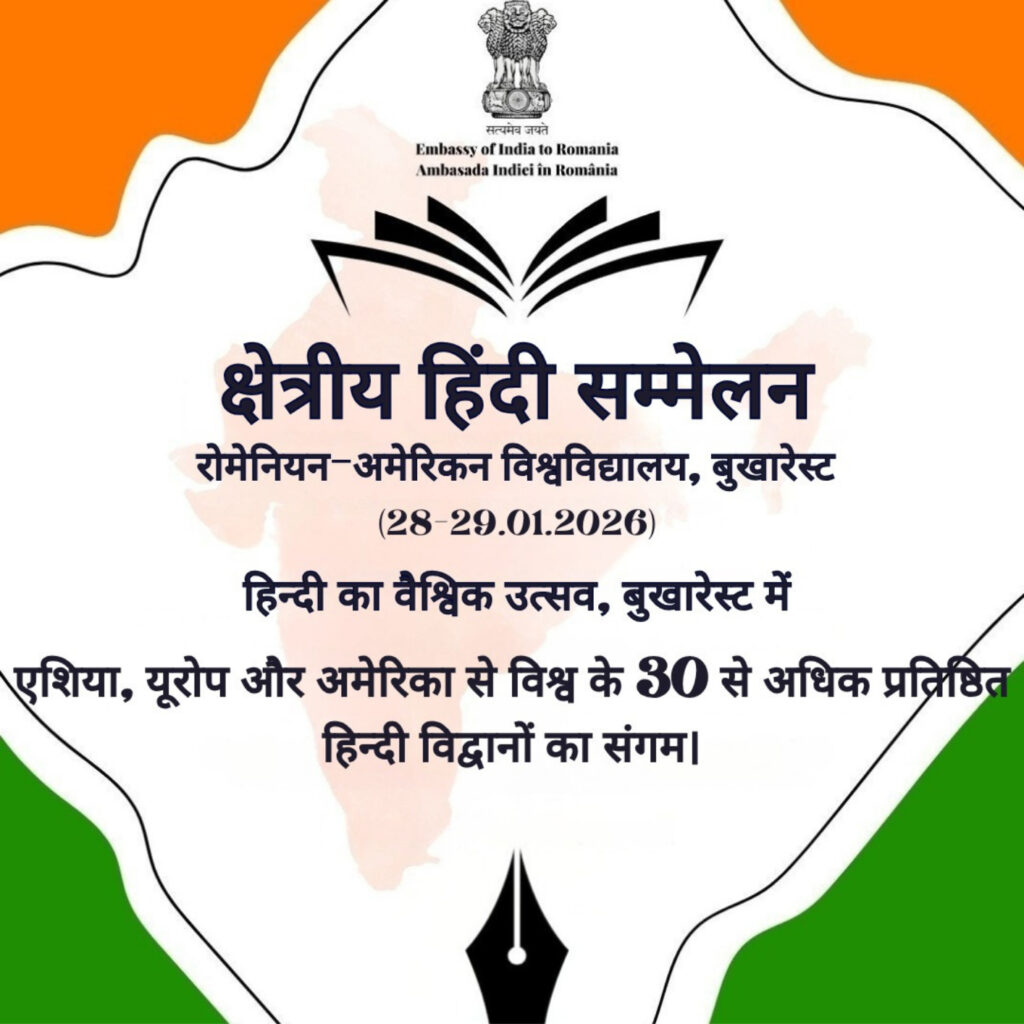
Bucharest | 28–29 January 2026

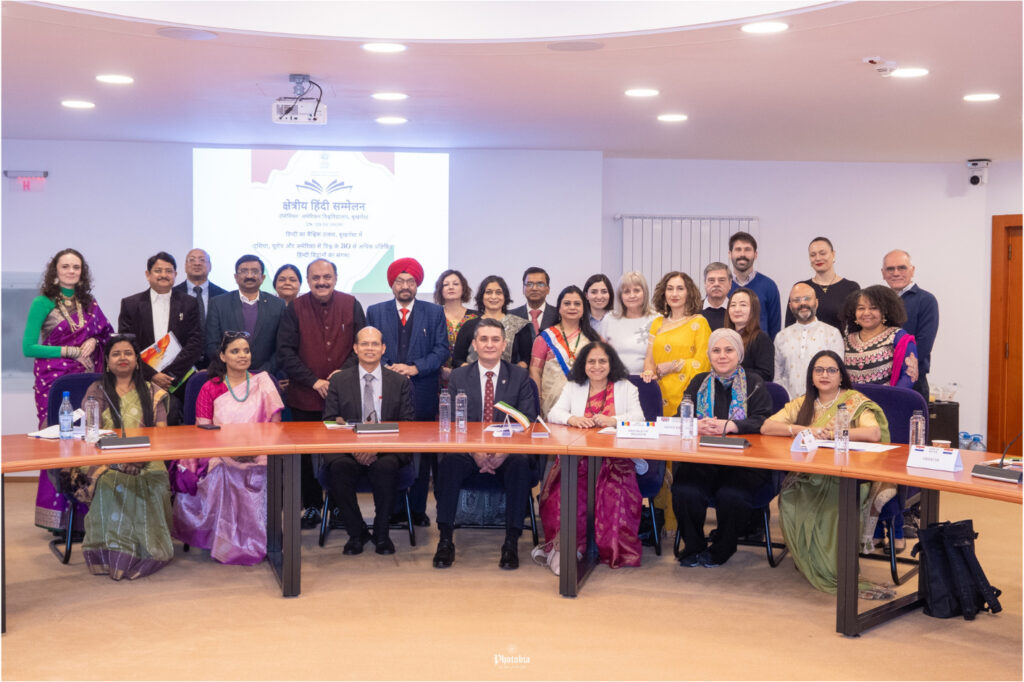
The Regional Hindi Conference organised by the Indian Embassy in Bucharest with the Ministry of External Affairs brought together Hindi scholars from Europe and India to discuss Hindi education, culture, and global collaboration.

India’s Growing Global Presence and the Expanding Role of Hindi

Bucharest, Romania.

India today is not only emerging as a strong global economy but is also establishing itself as an influential global presence. Alongside this transformation, the role of the Hindi language is steadily strengthening at the international level. With India’s expanding engagement in foreign trade, entrepreneurship, artificial intelligence, information technology, healthcare, education, and culture, Hindi is increasingly becoming a language of dialogue and human connection.

In the current global landscape, Hindi is no longer limited to cultural identity alone. It is evolving into a practical and professional medium of communication, particularly relevant for professionals, entrepreneurs, and students involved in international studies and cross-border cooperation.

Regional Hindi Conference in Bucharest: A Platform for Global Dialogue

In the current global landscape, Hindi is no longer confined to being a language of cultural identity alone; it is increasingly emerging as a medium of practical and professional communication. In this context, learning Hindi is expected to open new avenues of cooperation and opportunity for professionals, entrepreneurs, and students engaged in international studies in the years ahead.

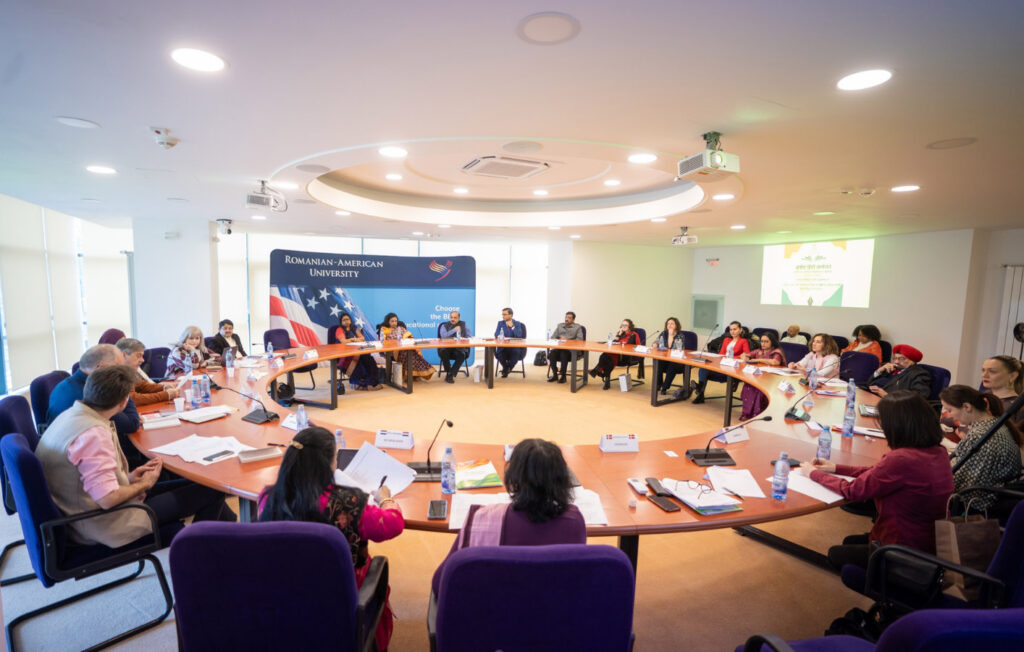
Against this broader global backdrop, a two-day Regional Hindi Conference was organised in Bucharest to deliberate on the teaching, study, and promotion of the Hindi language across Europe and other regions. The conference brought together Hindi teachers, researchers, language experts, writers, and cultural practitioners from various European countries and India on a common platform. Comprehensive and thoughtful discussions were held on the current status of Hindi, teaching methodologies, linguistic challenges, cultural dialogue, and future directions.

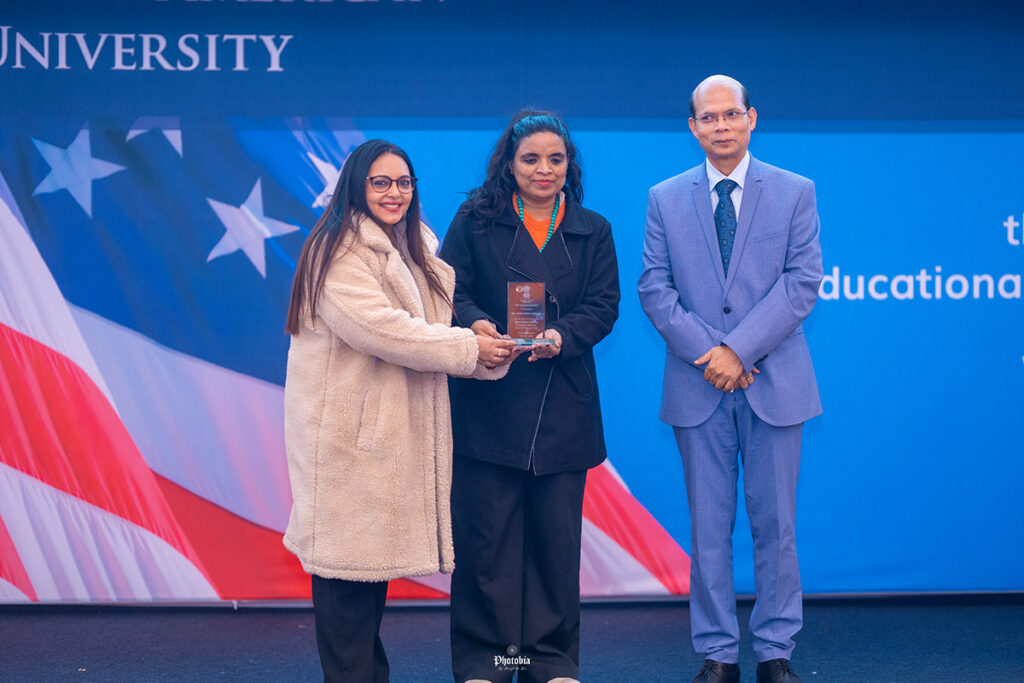
The conference was organised by the Indian Embassy in Bucharest, in collaboration with the Ministry of External Affairs, Government of India. Bringing together scholars from such a diverse range of countries on a single platform was, in itself, a significant and commendable initiative. The event benefited from the visionary guidance of Dr. Manoj Kumar Mohapatra, Ambassador of India, whose leadership played a key role in shaping the conference. The coordination and organisational efforts of Mr. Sitesh Kumar, Second Secretary at the Embassy, were also particularly noteworthy.

Representing the Ministry of External Affairs, Ms. Anju Ranjan, Joint Secretary (RBB, I&T), along with Ms. Snehi Sachetna, remained closely engaged with the proceedings throughout the conference on behalf of the Ministry.

On the first day, following the arrival and registration of participants, the conference formally commenced. Prof. Dr. Corina Negrisia, Rector of the Romanian American University, delivered the welcome address. This was followed by an address from Ambassador Dr. Manoj Kumar Mohapatra, who read the Prime Minister of India’s message on the occasion of World Hindi Day and highlighted the expanding global role of the Hindi language.

On this occasion, Shri K. D. Singh Gaur and Prof. Naveen Kumar (India) also shared their perspectives, further strengthening the intellectual foundation of the conference.

International Participants at the Regional Hindi Conference

The conference witnessed the participation of distinguished scholars, educators, and cultural practitioners from across Europe and India. The international representation included Heinz Werner Wessler (Sweden), Shraddha Mishra (Germany), Ritu Nannan Panday (Netherlands), Ms. Archana Painuly (Denmark), Mr. Tejinder Kumar Sharma (United Kingdom)Lazu Svetiana (Moldova),  Dr. Peter Sangi (Hungary), Richa Jain (United Kingdom), Aleksandra Antonia Turek (Poland), Daniela De Simone (Belgium), Predrag Cicovacki (Serbia), Dr. Hunda (Romania), Heinz Werner Wessler (Sweden), Canan Yogurt (Turkey), Prof. Matae Vadlja (Croatia), Ms. Gayane Najaryan (Armenia), Mr. Enrique Gallud Jardiel (Spain).

Their presence and engagement reflected the diversity of perspectives and a shared commitment toward the promotion of Hindi language, culture, and international academic collaboration.

European Perspectives and Future Directions for Hindi Education

During the conference, Hindi experts from various European countries shared insights into the current status of Hindi education in their respective regions, including existing teaching structures, available learning resources, and pedagogical practices. Speakers observed that in many European contexts, Hindi is no longer perceived merely as an optional or cultural language, but is increasingly emerging as a practical, academic, and professionally relevant language.

From a European perspective, it was suggested that the development of a structured and standardised framework for Hindi education, similar to the European language proficiency levels A1, A2, B1, B2, C1, and C2, could significantly strengthen Hindi teaching at the international level. Such a framework would provide clarity, continuity, and academic recognition for learners across different countries. In addition, emphasis was placed on expanding opportunities for undergraduate, postgraduate, doctoral, and post-doctoral studies in Hindi, as well as introducing interdisciplinary courses in related fields such as Indology.

Participants also highlighted the need to increase the number of qualified Hindi teachers and to establish Hindi departments in a larger number of European universities, ensuring long-term sustainability and institutional support for Hindi education across Europe.

Representing the Ministry of External Affairs, Ms. Anju Ranjan engaged in dialogue with the participants to better understand the current European landscape of Hindi education and to explore future possibilities for strengthening it through digital media, online platforms, and the use of Artificial Intelligence (AI). It was also indicated that, drawing from these collective European experiences, there is consideration at the Ministry level to organise a global conference on Hindi education in the future.

Collective Reflections on Hindi Education and Global Engagement

Throughout the conference, participants shared perspectives based on their experiences of teaching, learning, researching, and promoting Hindi in different countries. Discussions reflected the diversity of educational systems, student backgrounds, and cultural contexts in which Hindi is taught across Europe and beyond.

A common understanding emerged that there is no single uniform model for Hindi education at the global level. Institutions and educators adapt their approaches according to local needs, linguistic environments, and learner motivations. The importance of structured academic pathways, innovative teaching practices, digital tools, and cultural integration was repeatedly emphasised during the collective discussions.

Participants also reflected on the growing interest in Hindi among learners from varied backgrounds including those motivated by cultural curiosity, academic research, professional engagement with India, tourism, wellness traditions, and long-term collaboration between countries.

Hindi Teaching Systems, Academic Structure, and Linguistic Insights

A key theme that emerged was the absence of a single, centralised global system for teaching Hindi. Institutions across countries develop their own teaching models based on student needs and linguistic environments.

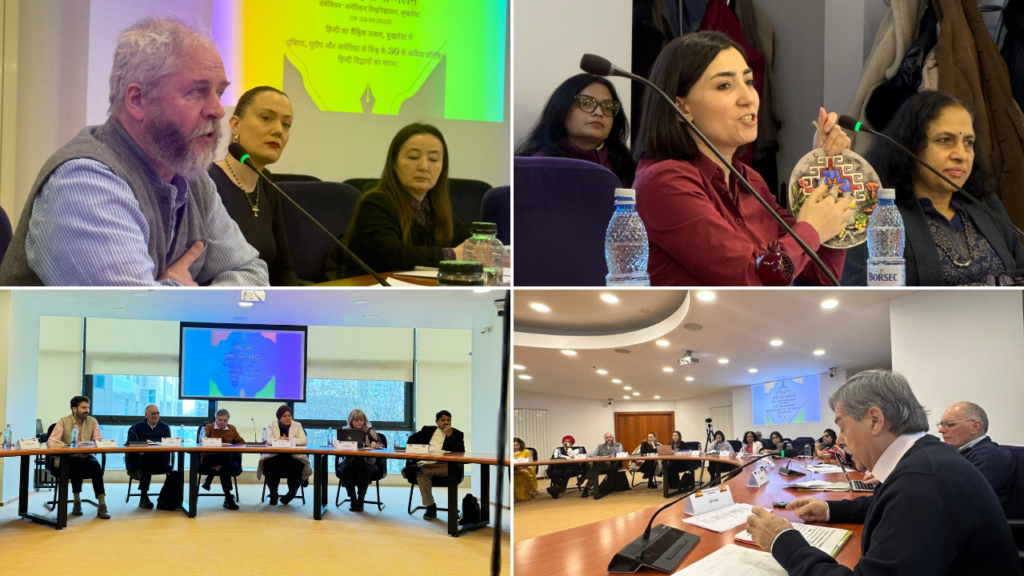
From Sweden, Professor Heinz Werner Wessler emphasised that Indian studies and South Asian studies in Europe are currently facing an intellectual and institutional crisis. He pointed to factors such as colonial perspectives, lack of funding, and neglect of language-based studies, stressing the need to reinterpret, preserve, and place India’s knowledge traditions at the center of academic discourse in a holistic, balanced, and contemporary global context. He underlined that strengthening linguistic scholarship and cross-cultural academic dialogue is essential for building a more just and inclusive global academic framework.

Turkish scholar Canan Yogurt highlighted linguistic similarities between Hindi and Turkish, citing words such as bazaar, misal, vakil, wada, and maloom. While these similarities support learning, she also noted that false similarities can create confusion.

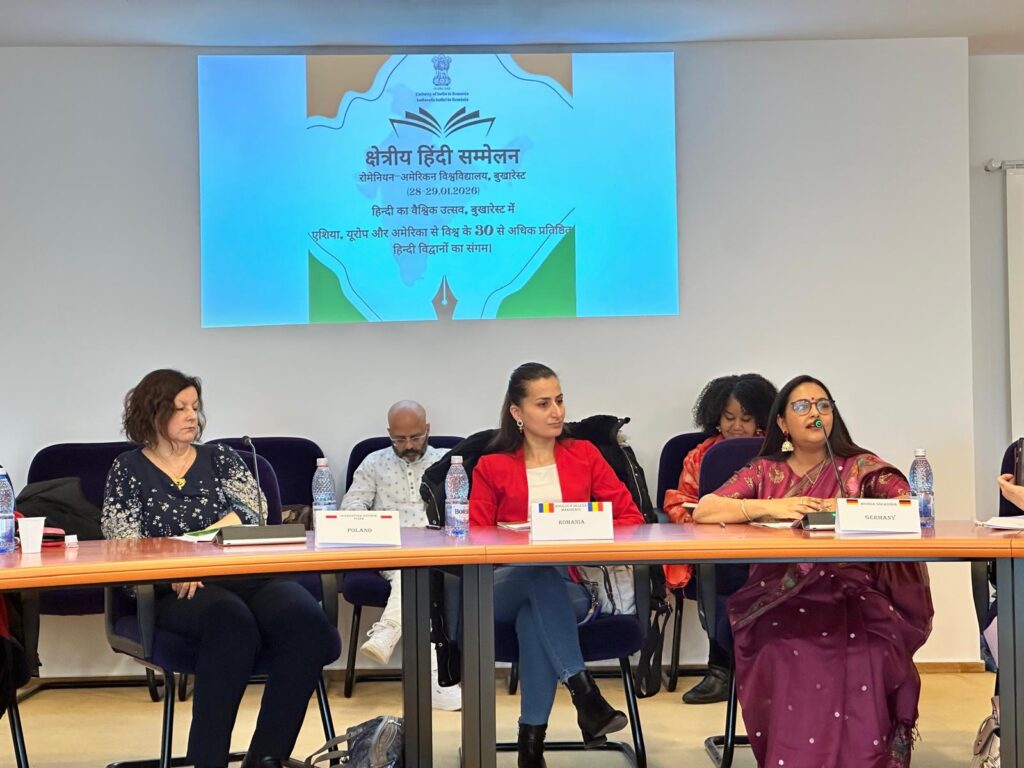
Archana Painuly from Denmark noted that In the era of globalisation, migrant life has become a common reality, and diaspora literature serves as its powerful reflection. Hindi is emerging as a language of multicultural dialogue while keeping migrants connected to their roots. Diaspora literature is enriching Hindi with new vocabulary, fresh perspectives, new ways of thinking, and contemporary discourse. Through themes of identity, cultural conflicts, struggles, and global experiences, it is making Hindi more relevant and meaningful in the modern context.

Dr. Peter Sangi from Hungary drew attention to the practical challenges associated with the Hindi script and the use of matras. He explained that for foreign learners, understanding the combination of consonants and vowel signs in words such as garmi often proves difficult, requiring teachers to address these linguistic subtleties with particular care.

From Poland, Aleksandra Turek shared her approach to teaching Hindi, highlighting her shift away from rigid and traditional methods. Instead, she introduces the language through play based learning, using cards, interactive activities, and small group sessions. This approach, implemented by her at the University of Warsaw, enables learners to engage with Hindi naturally and learn the language in a relaxed, pressure free, and enjoyable environment.

Shri K. D. Singh (India) offered reflective insights into the current direction and condition of Hindi, stressing that the language should never be associated with any sense of inferiority. Referring to the story Chief Ki Dawat, he observed that under the growing influence of English, people often begin to conceal their own language and culture. While English may facilitate global communication, he asserted, it can never take the place of one’s mother tongue.

Innovative Teaching Practices Across Europe

Aleksandra Antonia Turek (Poland) sharedthat she avoids rigid, traditional methods and instead teaches Hindi to children through games, flashcards, activities, and small group interactions. This approach allows children to lear

Dr. Ritu Nandan Panday (Netherlands) highlighted the long-standing contribution of the Girmitiya (Hindustani) community in promoting Hindi through cultural and literary activities in close cooperation with the Indian Embassy. Sheshared her work in translating and publishing local Dutch literary narratives into Hindi, thereby strengthening cultural and linguistic exchange.

Dr. Hunda of Romania delivered a presentation on her published Hindi language teaching materials, outlining their approach to presenting various learning aspects in a structured and effective way.

Academic Exchange, Bollywood, and Cultural Interaction

The conference sessions were smoothly moderated by Mr. Tejinder Kumar (UK), ensuring balanced participation, a steady flow of discussions, and an inclusive exchange of ideas among participants.

On this occasion he spoke about the influence of Bollywood abroad, highlighting that Hindi films and music have played a significant role in generating global interest in the Hindi language. He also recalled that Hindi was once taught in schools in the UK and that temples functioned not only as places of worship but also as important centres for Hindi and Sanskrit education.

Artist Lazu Svetiana from Moldova also shared how her dedicated dance group is learning and performing Indian classical and Bollywood dance forms, reflecting a growing admiration for Hindi and Indian culture.

Beyond the formal sessions, the conference offered valuable opportunities for informal interaction, networking, and mutual learning. Participants exchanged publications, shared experiences from their respective countries, and discussed possibilities for future academic and cultural collaboration.

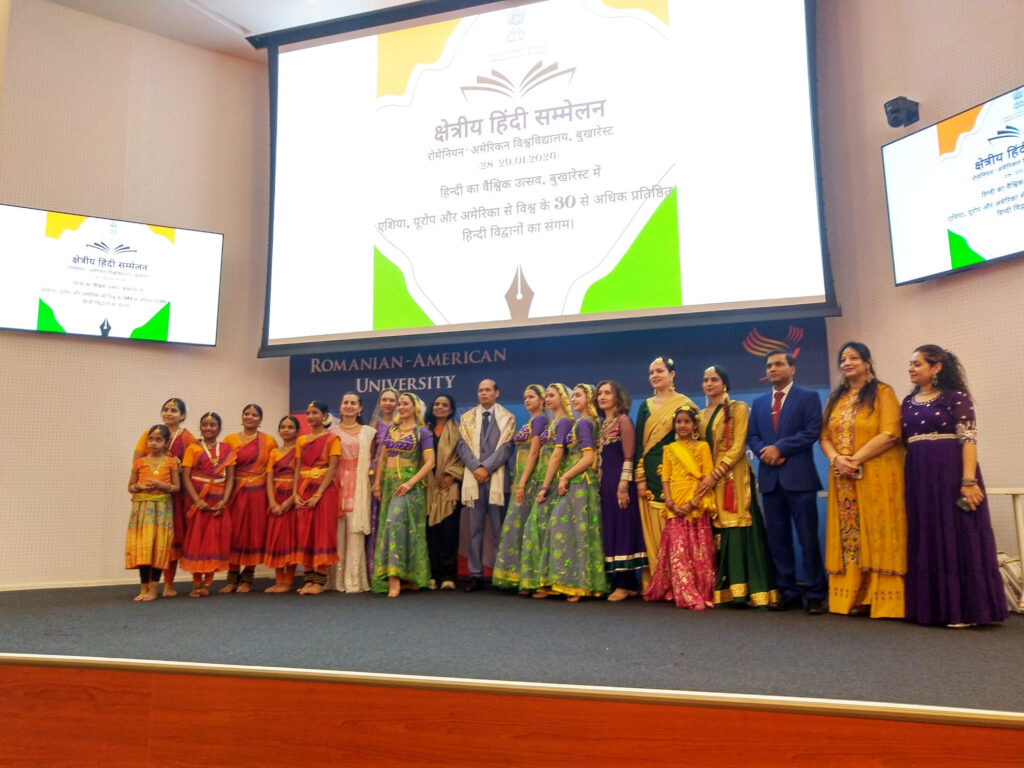
Cultural programmes formed an integral part of the conference. Romanian children presented Kathak and Kathak-based contemporary dance performances to Bollywood music, reflecting a growing interest in Indian performing arts among European youth. Members of the Indian community also presented classical and folk dances, highlighting India’s cultural diversity. Participants exchanged cultural souvenirs, adding a personal and symbolic dimension to the event.

Learning Beyond Classrooms: Digital Media, AI Enabled Self Study

The conference also underlined that language learning is not limited to classrooms and textbooks alone. Emphasis was placed on self learning and everyday usage as essential elements of meaningful language acquisition. Regular practice through speaking, listening, reading, and writing supported by music, films, digital content, and peer interaction was seen as crucial for sustaining interest and fluency in Hindi.

In the same context, Richa Jain delivered a significant presentation on Artificial Intelligence (AI), explaining how AI and digital technologies can enhance Hindi education, support content creation, and strengthen the global dissemination of the language. Her presentation was regarded as forward-looking and highly relevant to future educational needs.

In the same context, Shraddha Mishra, Founder and Chief Editor of Indo German Spectrum, also underscored the vital role of media in promoting the Hindi language and Indian culture abroad. She stated that digital platforms, website articles, interviews, and social media can serve as effective tools for presenting Hindi to international audiences, thereby fostering greater interest and a deeper sense of connection among younger generations.

She emphasised that no language can be fully mastered solely through educational institutions, classrooms, or textbooks. She stated that a language truly thrives when it is actively used in everyday life—through speaking, listening, reading, and writing.

She suggested that individuals living abroad who wish to learn Hindi should incorporate it into daily correspondence, greetings, family conversations, and interactions with friends. Listening to Hindi songs and poetry, following Hindi podcasts, watching films with Hindi subtitles, and recording one’s own voice to improve pronunciation and rhythm were highlighted as effective self-learning practices.

She further noted that learners benefit greatly from forming small practice groups, engaging in regular conversations, correcting one another’s mistakes, and practising Hindi in both written and spoken forms. Through such consistent and shared efforts, she observed, a language gradually becomes an integral part of daily life.

Shraddha Mishra also emphasised the vital role of media in promoting the Hindi language and Indian culture abroad, noting that digital platforms, website-based articles, interviews, and social media serve as effective channels for reaching international audiences and fostering greater interest and engagement, particularly among younger generations.

A Collective Vision for the Global Future of Hindi

The Regional Hindi Conference in Bucharest was not merely an academic gathering, but a forward-looking global dialogue on the evolving role of Hindi in education, culture, and international cooperation. The initiative taken by the Ministry of External Affairs and the Indian Embassy in Bucharest deserves strong appreciation for creating a space where diverse voices could come together in a spirit of mutual respect and shared purpose.

The discussions, connections, and cultural exchanges fostered during the conference are expected to contribute meaningfully to future efforts in Hindi education, research, and global cultural engagement, reinforcing the importance of such international platforms in an increasingly interconnected world.

Shraddha Mishra
Founder & Chief Editor, Indo German Spectrum Berlin, Germany
www.indo-germanspectrum.com