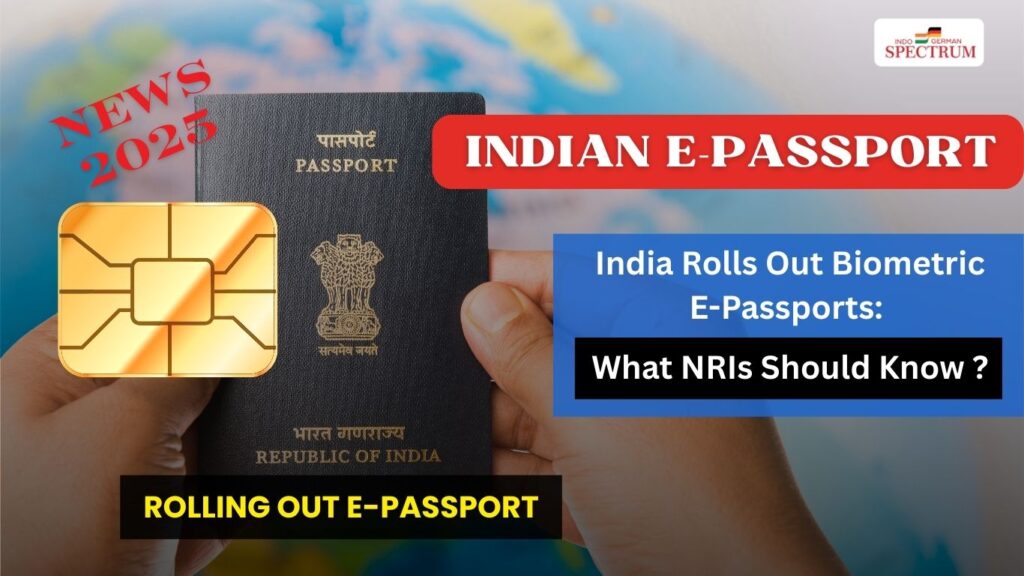
India Embraces the Future with Biometric E-Passports: What NRIs Should Know
In a major step toward enhancing travel security and modernizing its public services, India has officially joined the global league of over 120 countries by launching chip-based biometric e-passports. This initiative places India alongside technologically advanced nations such as the United States, Canada, France, Japan, and Australia, reaffirming its growing reputation as a high-tech, digitally empowered country.
What Are E-Passports?
An e-passport is a modern, secure travel document embedded with a microchip that contains biometric information such as the passport holder’s photograph, fingerprints, and demographic details. The chip is compliant with ICAO (International Civil Aviation Organization) standards and offers advanced protection against identity theft, data tampering, and misuse.
Why Is This a Milestone for India?
India’s move towards e-passports under the Passport Seva Programme 2.0 is not just a technological upgrade — it’s a statement of intent. This transformation aims to:
Strengthen border security with faster and more accurate identity verification
Prevent passport fraud and identity theft.
Facilitate seamless immigration and faster processing at international borders.
Enhance global travel experience for Indian citizens.
Pilot Rollout and Timeline
The implementation of e-passports began in April 2025 in select Indian cities such as:
A nationwide rollout is expected by mid-2025, according to News18 reports, with full integration into the Passport Seva system and global recognition of India’s e-passport format.
What Should Indian Passport Holders Abroad (NRIs) Do?
If you are an Indian passport holder living outside India, here’s what you need to know and consider:
1. Your Current Passport Is Still Valid
E-passports are being introduced gradually, and existing passports remain valid until their expiration date. You do not need to replace your passport immediately unless you are due for renewal.
2. Plan for an E-Passport at Renewal
If your passport is due to expire within the next 12 months, consider applying for a renewal and request an e-passport if it becomes available at your Indian Mission/Embassy. Keep checking with your local Indian consulate or embassy for updates.
3. Stay Updated via Passport Seva and Indian Embassies
The Passport Seva portal and Indian embassies abroad will update the list of missions where e-passports are available. Subscribe to their newsletters or follow official websites and social media pages for announcements.
4. Ensure Biometric Readiness
Since e-passports require biometric data, make sure your local Indian mission has facilities to capture and process this information. Some older passports may not have biometric records on file.
5. Verify ICAO Compliance When Traveling
As more countries adopt automated immigration gates and biometric scanning systems, having an e-passport will ensure smoother international travel. Upgrading to an e-passport in the near future could be advantageous if you travel frequently.
6. For Parents of Children Born Abroad
If your child is an Indian citizen and you are applying for their first passport, check if the e-passport format is available in your jurisdiction. Starting off with a secure, biometric passport can be beneficial in the long run.
Embrace the change, travel with ease.
India’s transition to biometric e-passports is a clear sign of its digital ambition and focus on global mobility and citizen convenience. For NRIs, this is an opportunity to align with the latest security standards and be part of India’s ongoing technological transformation.
Whether you’re preparing for a passport renewal or planning international travel in the near future, staying informed and proactive will ensure a smooth transition to this new digital identity system.
Stay Connected, Stay Updated — India is Digitally Moving Forward, and So Should You.