Makar Sankranti: When the Sun Guides Life, Values, and Collective Joy
India’s festivals are not isolated celebrations limited to ritual or tradition. They are expressions of an ancient civilisation that closely observed nature, planetary movements, and human life as one interconnected system. Rooted in the wisdom of the Vedas, Puranas, and the teachings of enlightened sages, Indian culture designed festivals as moments of realignment with cosmic rhythms. Makar Sankranti stands as one of the finest examples of this scientific, social, and spiritual harmony.
The Sacred Transition of the Sun
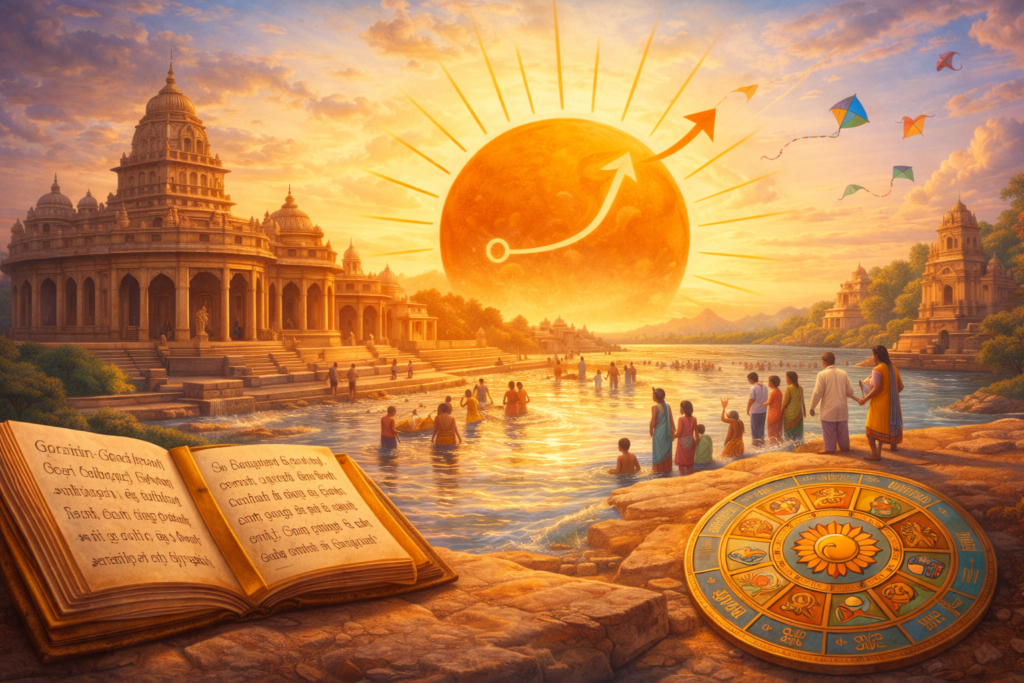
Makar Sankranti marks the moment when the Sun enters the zodiac sign of Capricorn (Makar) and begins its northward journey, known as Uttarayan. This transition signifies the movement of the Sun from the southern path to the northern direction, bringing longer days, increasing warmth, and renewed vitality to the Earth. Unlike many Indian festivals that follow the lunar calendar, Makar Sankranti follows the solar calendar, highlighting India’s advanced understanding of astronomy and seasonal cycles.
Spiritually, Uttarayan symbolises a shift from darkness to light, ignorance to awareness, and stagnation to growth. It is a reminder that life itself must keep moving forward in alignment with natural law.
The Sun and the Logic of Living
In Sanatan Dharma, the Sun is revered as the source of prana, discipline, clarity, and inner strength. The lifestyle encouraged during Makar Sankranti such as waking early, receiving sunlight, consuming seasonal foods, and engaging with the community reflects a deeply scientific approach to health and wellbeing. What appears as tradition is, in essence, a carefully structured way of living in tune with nature.
One Festival, Many Names, One Cosmic Truth
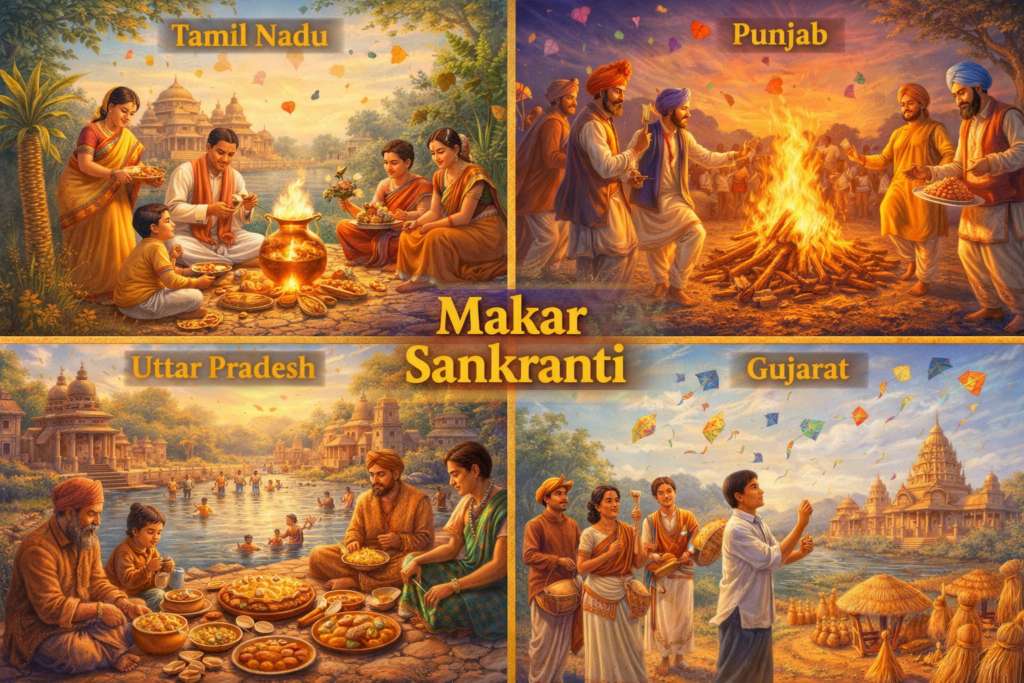
Across India, Makar Sankranti is celebrated under different names, shaped by regional culture and geography, yet united by the same solar transition.
In Tamil Nadu, it is celebrated as Pongal, a harvest thanksgiving where newly harvested rice is cooked and offered to the Sun.
In Punjab, Lohri is marked by bonfires, folk songs, and collective joy, welcoming the end of peak winter.
In Assam, Magh Bihu celebrates abundance through community feasts and traditional activities.
In Gujarat and Maharashtra, kite flying dominates the skies, symbolising the Sun’s upward movement and the rise of positive life energy.
Uttar Pradesh: Khichdi Parv and the Spirit of Simplicity
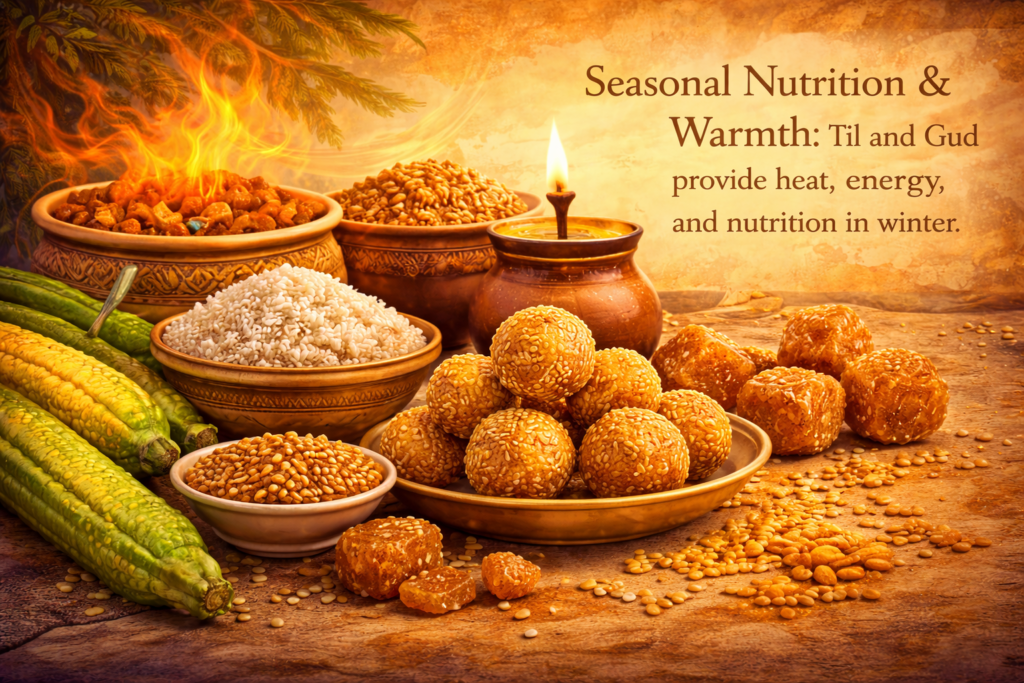
In Uttar Pradesh, Makar Sankranti is widely known as Khichdi Parv. Families traditionally prepare khichdi, a nourishing combination of rice and moong dal, generously topped with pure ghee. This simple yet powerful dish supports digestion during winter and reflects the wisdom of seasonal nutrition.
Khichdi is offered in temples, shared within families, and distributed among neighbours and the needy. Alongside it, til and jaggery laddoos, seasonal vegetables, and warming foods are prepared. Kite flying adds colour and joy, especially among children, symbolising freedom, hope, and the upward movement of life.
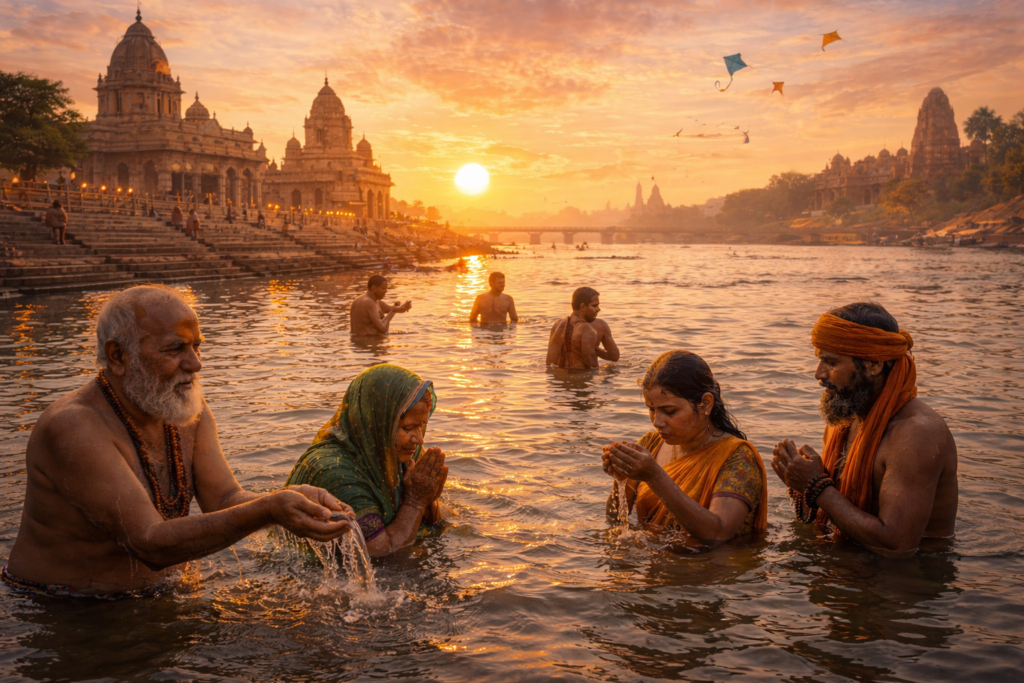
This practice is linked to the Sun’s northward movement (Uttarayan). Traditional belief holds that during this solar transition, flowing water bodies are naturally energised by increased solar influence. Bathing in rivers at this time is associated with physical cleansing, seasonal adaptation, and spiritual renewal. The ritual also reflects the inclusive philosophy of Sanatan Dharma, emphasising equality, harmony with nature, and collective well-being rather than attachment to a single location.
Donation, Compassion, and Collective Well-being
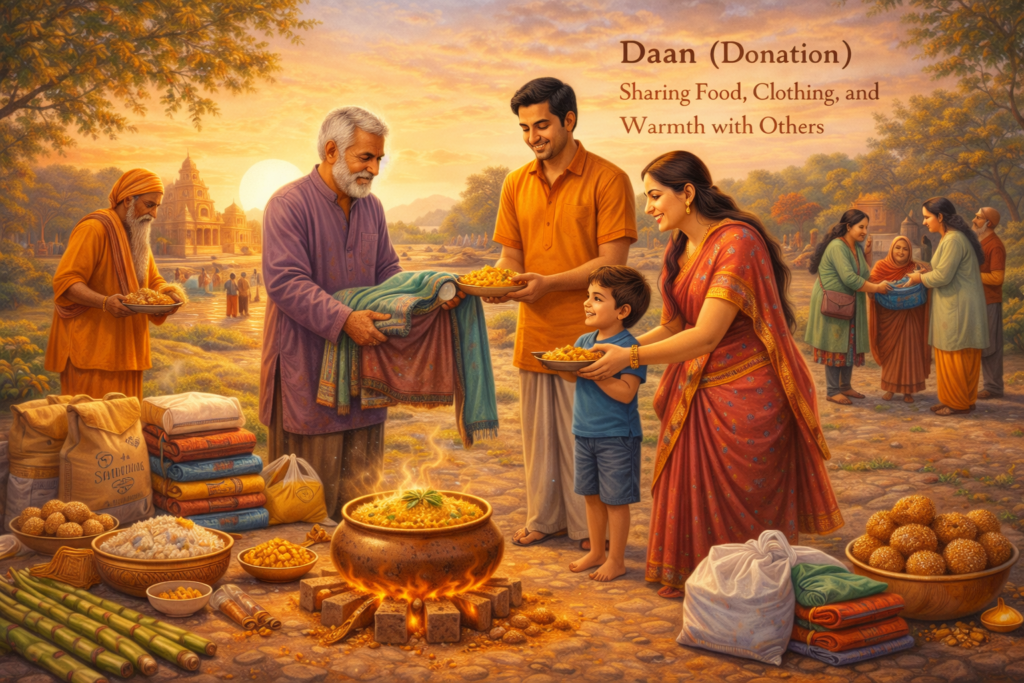
One of the most meaningful aspects of Makar Sankranti is the emphasis on daan (donation). Across India, people donate food, clothes, grains, and essentials to those in need. In many households, the first preparation of the day is meant for sharing beyond the family, reinforcing the belief that prosperity becomes meaningful only when it is shared.
This tradition carries a deep social and spiritual message. As the Sun changes its direction and begins a new cycle, society too is encouraged to begin the year with generosity, compassion, and inclusiveness. The festival reminds everyone that true celebration is incomplete unless the underprivileged, the elderly, and the vulnerable are included in the joy.
A Festival of Collective Happiness
Makar Sankranti is not just a seasonal or religious occasion. It is a cultural philosophy that teaches how individual wellbeing is linked to community harmony. By sharing food, donating resources, flying kites together, and gathering as families and neighbourhoods, the festival creates a sense of collective renewal.
The deeper ideology of Makar Sankranti conveys a timeless truth: with the Sun’s new direction begins a new chapter of hope, happiness, and balance for all. It marks the start of the year not with material ambition, but with gratitude, unity, and service to humanity.
At Indo German Spectrum, such festivals are viewed as living knowledge systems that continue to offer guidance to the modern world, bridging science, spirituality, and social responsibility.
🌐 Explore more stories on Indian wisdom, culture, and Indo German connections at